Does Chewing Gum Actually Help with Stress and Focus? The Science Says Yes
by Colin Ross
·
Stress is at an all-time high across the United States. And while meditation apps and sleep trackers get most of the wellness press, one of the oldest, simplest tools for managing everyday tension is sitting in your pocket right now: chewing gum.
The Link Between Chewing Gum and Stress Relief
The connection between chewing and stress reduction isn't just anecdotal. Multiple peer-reviewed studies have found that chewing gum can measurably lower cortisol — the body's primary stress hormone. In one widely cited study, participants who chewed gum during stressful tasks reported lower feelings of anxiety and performed better under pressure compared to non-chewers.
The proposed mechanism? Rhythmic jaw movement activates the parasympathetic nervous system — the "rest and digest" branch that counteracts the fight-or-flight stress response. It's a bit like pacing when you're nervous, but for your jaw. And unlike pacing, you can do it anywhere: in a boardroom in Manhattan, before a presentation in Dallas, or stuck in traffic on the 405.
Chewing Gum and Brain Power: What the Research Shows
Beyond stress relief, chewing gum has been studied for its effects on cognitive performance. A 2025 neuroimaging review published in the journal Brain Sciences analyzed decades of EEG and fMRI data and found that chewing activates extensive sensorimotor brain networks, and may also support higher-order cognitive processes including attention and memory recall.
Key findings from the research include:
· Faster reaction time: Improved alertness and reaction time — chewers consistently outperformed non-chewers on tasks requiring sustained attention.
· Memory boost: Better short-term memory — chewing during learning tasks appeared to help with information encoding.
· Less mental fatigue: Reduced mental fatigue — participants reported feeling less cognitively drained after prolonged focus tasks when chewing.
· Anxiety reduction: Lower perceived stress — self-reported anxiety scores dropped when gum was introduced during high-pressure scenarios.
Why Do Students and Professionals Chew Gum?
It's no coincidence that gum is a staple in college libraries, law firms, and trading floors across America. Many habitual gum chewers instinctively reach for a piece when they need to concentrate — and the science backs up what they've been doing by feel.
The effect appears to be strongest in the first 15–20 minutes of chewing, which is when saliva production, neural activation, and the sensory novelty of a new flavor are all peaking. This makes gum particularly well-suited for short, intense focus windows — a study session, a work sprint, or a high-stakes call.
Does the Type of Gum Matter?
For stress and focus benefits, the type of gum matters less than you might think — the act of chewing itself drives most of the effect. That said, sugar-free gum is still the smarter choice for everyday use: you get the cognitive and stress benefits without the dental downsides. Mint flavors may offer an additional mild alertness boost thanks to the cooling sensation of menthol activating trigeminal nerve receptors.
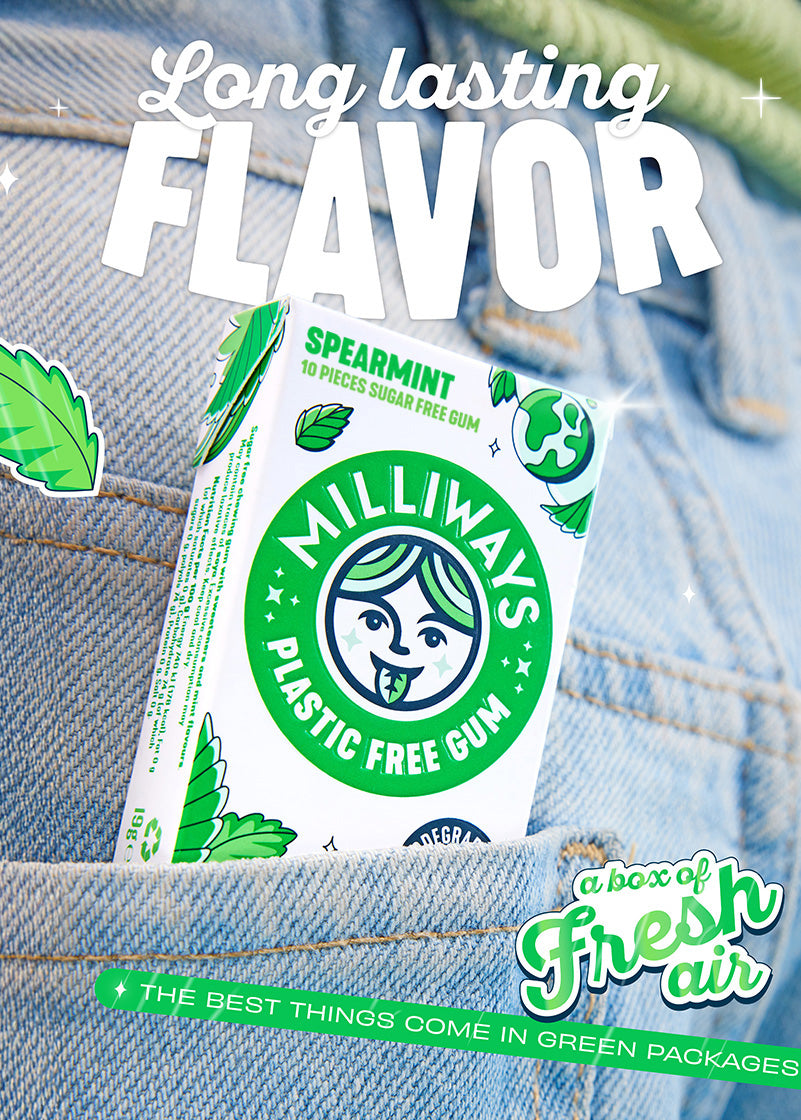
Chew Smarter with Milliways
At Milliways, we believe every chew should count. Our clean, plant-based gum gives you the full sensory experience — long-lasting flavor, satisfying chew, genuine freshness — without synthetic ingredients or artificial sweeteners. Whether you're heading into a big meeting or just need to take the edge off a busy afternoon, Milliways is the gum your brain will thank you for.
Available online and at select retailers across the United States.
👉 Try Milliways today — clean ingredients, real results, delivered to your door.